



Bfl-1
Bfl-1, also known as BCL2A1, is an anti-apoptotic member of the BCL-2 protein family that promotes cell survival by restraining the activation of the pro-apoptotic effectors BAX and BAK, thereby limiting mitochondrial outer membrane permeabilization and caspase-dependent apoptosis[1][2][3]. Bfl-1 functions within the intrinsic apoptotic pathway, where anti-apoptotic BCL-2 proteins bind BH3-only proteins and suppress mitochondrial cytochrome c release, a critical step in apoptosis regulation[2][3][4]. Mechanistically, Bfl-1 contains conserved BCL-2 homology domains and acts as a pro-survival factor that sequesters pro-apoptotic signaling components under cellular stress conditions[3][5]. In hematopoietic and endothelial cells, Bfl-1 expression is regulated by inflammatory stimuli, linking apoptosis control to immune and inflammatory signaling pathways[6]. In disease contexts, elevated Bfl-1 expression has been reported in multiple cancers and is associated with tumor cell survival and resistance to anticancer therapies[1][3][4]. Compared with related anti-apoptotic isoforms such as BCL-2, BCL-xL, and MCL-1, Bfl-1 remains relatively understudied and is considered a distinct pro-survival factor with unique expression patterns and therapeutic relevance in selected malignancies[1][5]. For experimental applications, Bfl-1 has emerged as a target for BH3-mimetic drug development; however, highly selective Bfl-1 inhibitors remain limited compared with clinically established inhibitors targeting other BCL-2 family proteins[1][4][7].
References:
- [1]. Wang G, et al. Last but not least: BFL-1 as an emerging target for anti-cancer therapies. Biochem Soc Trans. 2022 Aug 31;50(4):1119-1128. [Content Brief]
- [2]. Vogler M, et al. The BCL2 family: from apoptosis mechanisms to new advances in targeted therapy. Signal Transduct Target Ther. 2025;10:91.
- [3]. Kaloni D, et al. BCL-2 protein family: attractive targets for cancer therapy. Apoptosis. 2023 Feb;28(1-2):20-38. [Content Brief]
- [4]. Qian S, et al. The role of BCL-2 family proteins in regulating apoptosis and cancer therapy. Front Oncol. 2022 Oct 12;12:985363. [Content Brief]
- [5]. Simon HG. Salamanders and fish can regenerate lost structures--why can't we? BMC Biol. 2012 Feb 27;10:15. doi: 10.1186/1741-7007-10-15. PMID: 22369645; PMCID: PMC3287246. et al. Salamanders and fish can regenerate lost structures--why can't we? BMC Biol. 2012 Feb 27;10:15. [Content Brief]
- [6]. Werner AB, et al. Bcl-2 family member Bfl-1/A1 sequesters truncated bid to inhibit is collaboration with pro-apoptotic Bak or Bax. J Biol Chem. 2002 Jun 21;277(25):22781-8. [Content Brief]
- [7]. D'Aguanno S, et al. Inhibition of Anti-Apoptotic Bcl-2 Proteins in Preclinical and Clinical Studies: Current Overview in Cancer. Cells. 2020 May 21;9(5):1287. [Content Brief]
All Product Categories
-
Bfl-1 Related Products (11)
Related Products (11)

- 1
-
ABT-737
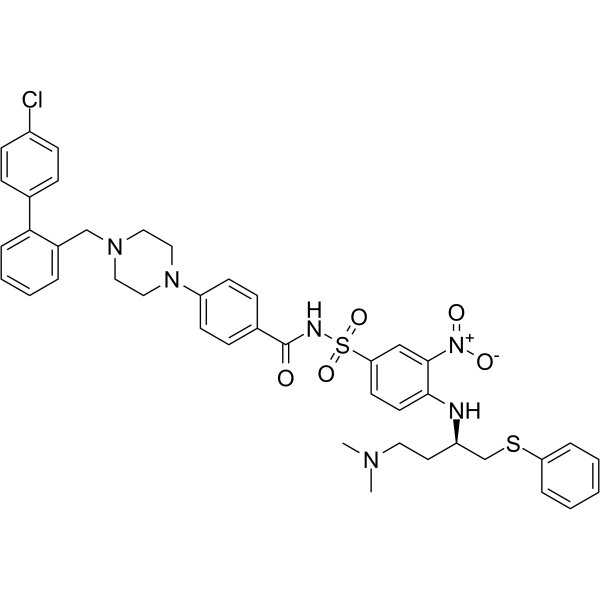 0 ImagesABT-737, a BH3 mimetic, is a potent Bcl-2, Bcl-xL and Bcl-w inhibitor with EC50s of 30.3 nM, 78.7 nM, and 197.8 nM, respectively. ABT-737 induces the disruption of the BCL-2/BAX complex and BAK-dependent but BIM-independent activation of the intrinsic apoptotic pathway. ABT-737 induces autophagy and has the potential for acute myeloid leukemia (AML) research.
-
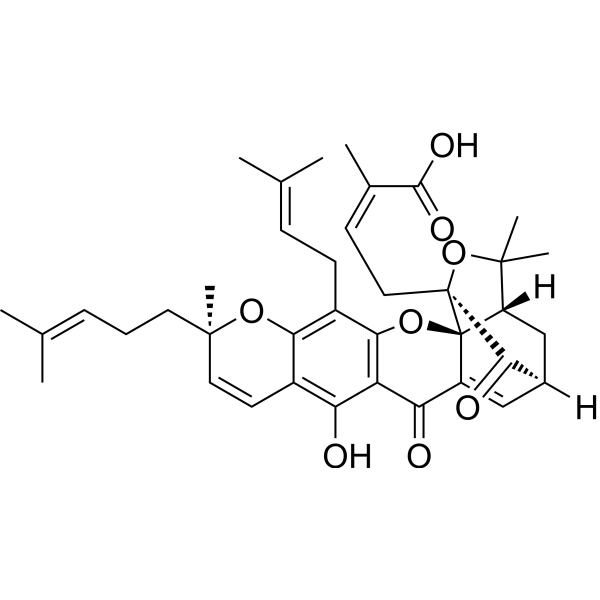
Sabutoclax
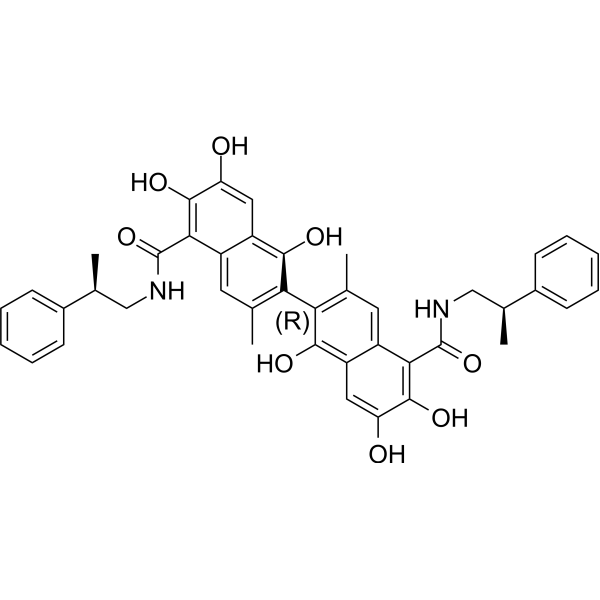 0 ImagesSynonyms: BI-97C1
-
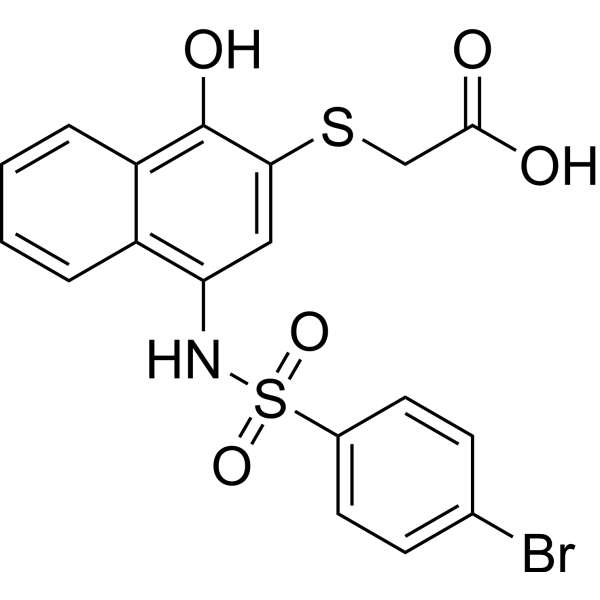
Bfl-1-IN-5
 0 ImagesBfl-1-IN-5 is a covalent and selective Bfl-1 inhibitor with an IC50 of 22 nM. Bfl-1-IN-5 shows selectivity for Bfl-1 over Bcl-xl, Bcl-2 and Mcl-1. Bfl-1-IN-5 induces caspase-3/7 activation, reduces the viability of Bfl-1-expressing lymphoma cells in combination with an Mcl-1 inhibitor, and binds covalently to intracellular Bfl-1. Bfl-1-IN-5 can be used for lymphoma research.
-
Bfl-1-IN-6 TFA
 0 ImagesBfl-1-IN-6 TFA is an orally active BFL1 inhibitor with an IC50 of 19 nM. Bfl-1-IN-6 TFA selectively binds covalently to BFL1, stabilizes the protein and displaces BIM from BFL1, thereby inducing apoptosis activity. Bfl-1-IN-6 TFA stabilizes BFL1 protein, activates cleaved caspase 3, and exhibits antitumor activity in mouse models. Bfl-1-IN-6 TFA can be used for the research of hematological malignancies.
-
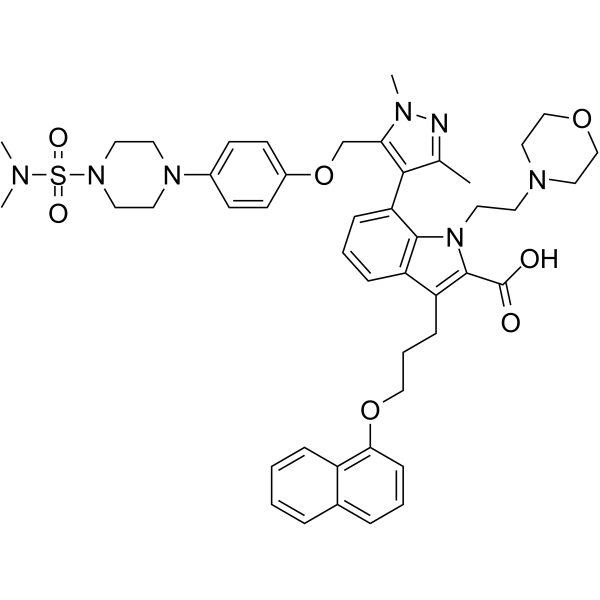
Mcl-1 inhibitor 6
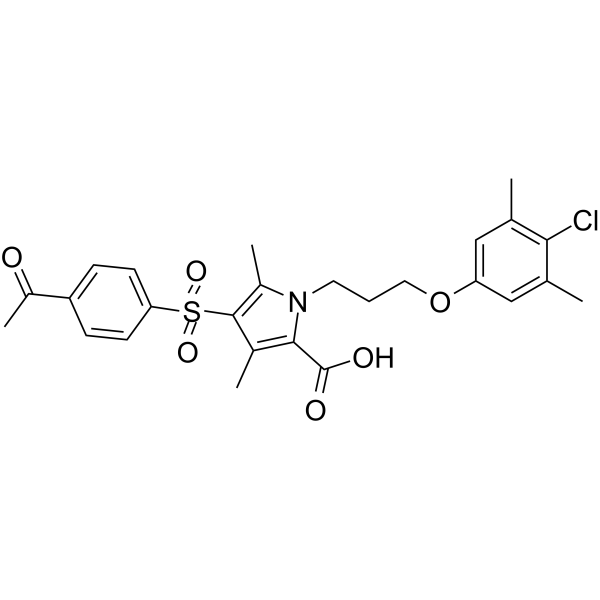 0 ImagesMcl-1 inhibitor 6 is an orally active, selective myeloid cell leukemia 1 (Mcl-1) protein inhibitor with a Kd of 0.23 nM and a Ki of 0.02 μM. Mcl-1 inhibitor 6 possesses superior selectivity over other Bcl-2 family members (Bcl-2, Bcl2A1, Bcl-xL, and Bcl-w, Kd>10 μM). Mcl-1 inhibitor 6 is a potent antitumor agent.


-
Bfl-1-IN-7
 0 ImagesCat. No.: HY-180941Bfl-1-IN-7 is an orally active and selective Bfl-1 inhibitor with an IC50 value of 0.015 μM. Bfl-1-IN-7 activates caspase 3/7, and when combined with the Mcl-1 inhibitor AZD5991 (HY-101533), it reduces the viability of lymphoma cells. Bfl-1-IN-7 can be used in lymphoma-related studies.
- 1



